Can a Chiropractor Actually Fix a Herniated Disk, or Are You Just Hoping?
A Fair Question From Someone Whose Back Has Stopped Playing Along
The herniated disk is one of medicine’s more reliable overachievers. A structure roughly the size of a poker chip decides to malfunction, and suddenly a person can’t sit, can’t stand comfortably, and is receiving unsolicited opinions about surgery from everyone who has ever met someone who had surgery. Chiropractic care for herniated disk in Clarksville gets asked about frequently, and the honest answer is more nuanced than either the dismissive version or the enthusiastic one.
Here’s what the research and clinical experience actually support.
Q: Does chiropractic treatment have any real evidence behind it for herniated disks?
Yes, and the literature has continued strengthening. A 2025 case report published in the Journal of Contemporary Chiropractic documented non-surgical resorption of a massive lumbar disk extrusion, measuring 10mm with 19mm of caudal migration at L3-4, following a comprehensive chiropractic care plan that included spinal manipulation therapy. The researchers noted significant improvement at each re-examination interval without surgical intervention.
A 2024 neuroimaging study found that spinal manipulation therapy not only reduced pain and dysfunction in lumbar disk herniation patients but also partially normalized abnormal regional brain activity and functional connectivity changes. The study, cited in the top chiropractic research summaries for 2025, provided preliminary evidence that the effects of manipulation extend beyond mechanical joint correction into neurological pain processing.
Neither of these findings claims chiropractic is appropriate for every herniated disk presentation. They do establish that the treatment has a legitimate evidence base for appropriate candidates, which is a more precise statement than the field often gets credit for.
Q: What does the actual adjustment do to a herniated disk?
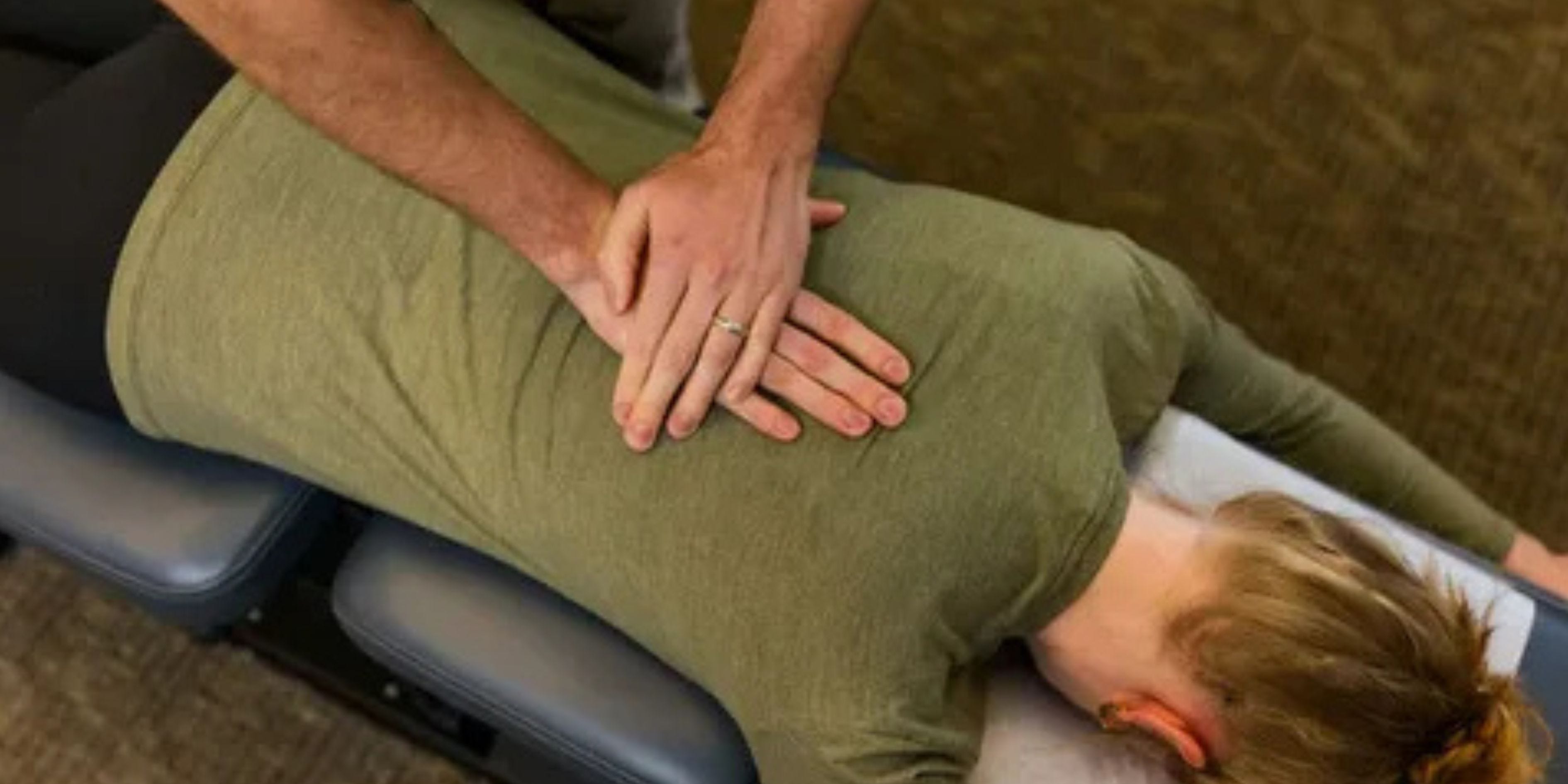
The mechanism is not, as sometimes imagined, that the chiropractor physically pushes the disk back into position like rearranging furniture. Chiropractic adjustment care in Clarksville, properly applied for disk-related conditions, works through several overlapping mechanisms:
Restoring segmental mobility at the affected spinal level, which reduces the mechanical loading pattern driving disk stress
Reducing paraspinal muscle guarding and hypertonicity that compresses the disk space and perpetuates pain
Modulating nociceptive signaling at the spinal cord level, which explains the neurological dimension of the 2024 imaging research
Creating conditions under which the body’s own resorption process, which handles many herniated disks over time, can proceed without ongoing mechanical interference
For disk cases specifically, most qualified chiropractors avoid high-velocity manipulation directly at the herniation site in the acute phase, using gentler techniques such as flexion-distraction instead. Flexion-distraction uses a specialized table to apply a slow, rhythmic traction force to the lumbar spine, creating negative intradiscal pressure without triggering the guarding response that straight traction tends to produce. Clinical studies show meaningful symptom improvement in the majority of patients within eight weeks using this approach.
Q: Who is a good candidate, and when does the conversation need to change?
Most patients with lumbar disk herniation and associated sciatica, without significant neurological deficits, are reasonable candidates for a trial of conservative chiropractic care. The clinical literature consistently supports this as a first-line approach before injection therapy or surgery for uncomplicated presentations. Chiropractic care for herniated disk in Clarksville tends to produce the best outcomes in patients whose symptoms are mechanical in character, meaning they change with position and movement, rather than constant and unresponsive to any change in loading.
The conversation does need to change when progressive neurological loss is occurring. Worsening weakness in the leg, loss of bowel or bladder control, or rapidly expanding sensory deficits are signs that surgical evaluation should not be delayed in favor of conservative care. A chiropractor who identifies these signs and refers appropriately is demonstrating exactly the clinical judgment the field is built on.
Short of those red flags, the evidence supports a structured course of care, typically six to twelve weeks, before escalating to more invasive options. Patients who combine chiropractic care for herniated disk in Clarksville with adjunctive rehabilitation, addressing the muscular and movement pattern contributors that perpetuate disk stress, tend to achieve more durable outcomes than those who rely on adjustment alone.
The Honest Summary
A herniated disk is not the mechanical catastrophe it tends to feel like. The body has a documented capacity to resorb disk material over time, and chiropractic care, when applied thoughtfully and to the right candidate, supports rather than competes with that process. The research behind it is real, the contraindications are well defined, and the outcomes for appropriate patients are meaningfully better than the alternatives most people reach for first. The only thing standing between a reasonable patient and this information is usually a waiting room and a clear explanation of what the treatment actually does.